47
Nests on buildings
Some birds, particularly house
martins, swifts, swallows, and storks
build their nests in stone and brick
houses. Walls and window-ledges
make an ideal home for cliff-nesting
birds; while rooftops and chimneys
are used by birds that originally
nested in tree-tops.
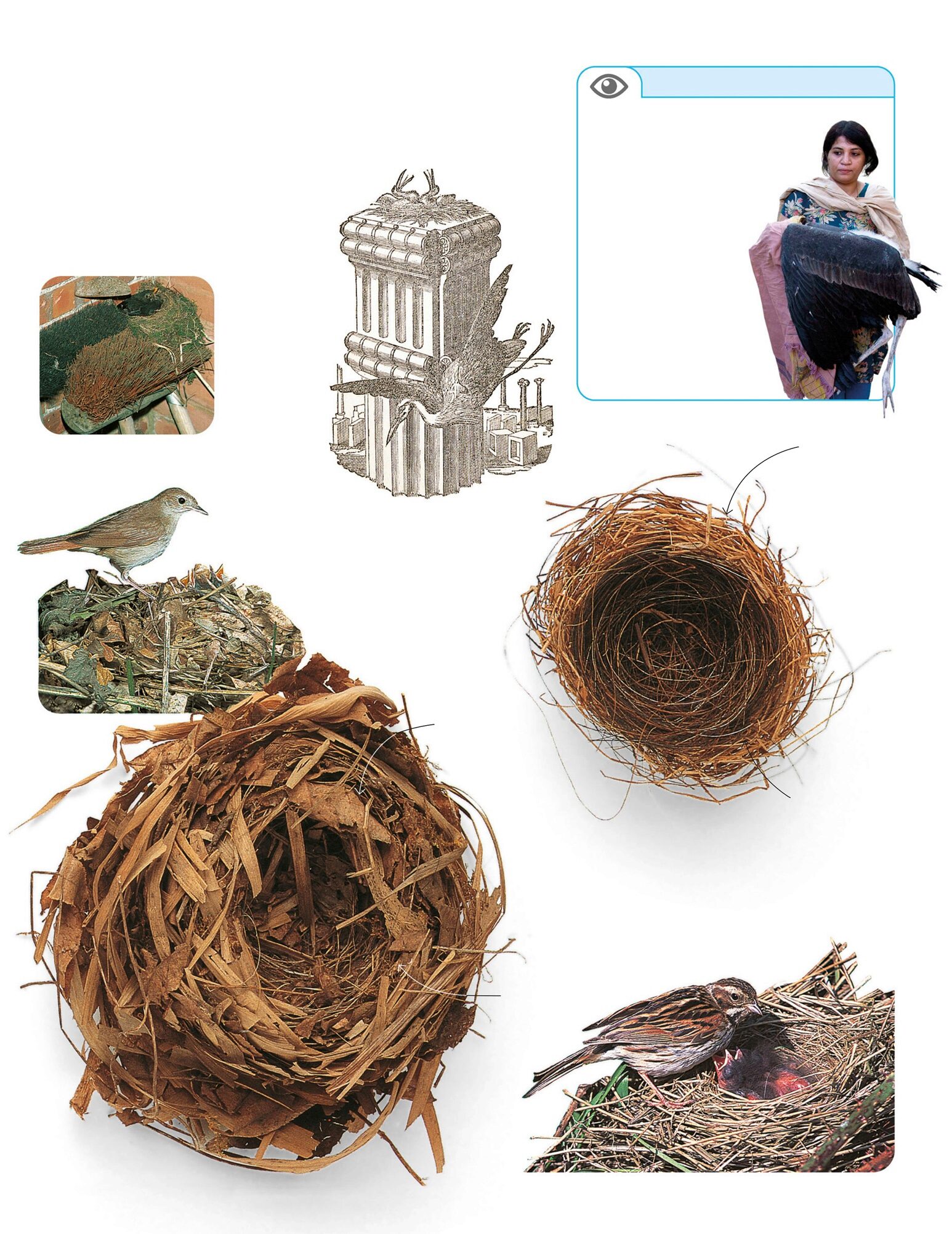
Tree substitute
Some storks pile up
their stick nests on
chimneys and the tops
of buildings.
Hedgerow
birds pick
sites by
height – this
blackbird
has chosen
a broom.
Purnima Devi Barman
Indian biologist Purnima Devi
Barman has helped to conserve
greater adjutant storks in
Assam, India. She formed
a group of more than
10,000 women living in
rural areas who saved
nesting colonies by
teaching other
villagers about the
birds. This discouraged
people from cutting
down trees where the
storks nested.
EYEWITNESS
Nightingale
in the nest
Ready for recycling
This nightingale’s loosely made
nest is formed of leaves, grass,
and reeds. Loose nests may
be dismantled by other
birds for “recycling” after
their owners have left.
Lining made of
hair collected
from ferns and
bark against
which animals
have rubbed
Loosely made
cup-shaped
nest
Grass lining
on inside
of cup
Female reed
bunting
at nest
A hair-filled nest
Reed buntings build small cup-shaped
nests on or near the ground. The female
first builds a frame of thick grass. She
then adds a lining of fur or hair, plucked
from hedgerows or barbed wire.
Outer cup made
of grass, leaves,
and stems